Why People Resist Being Sold but Love Being Helped
Nov 10, 2026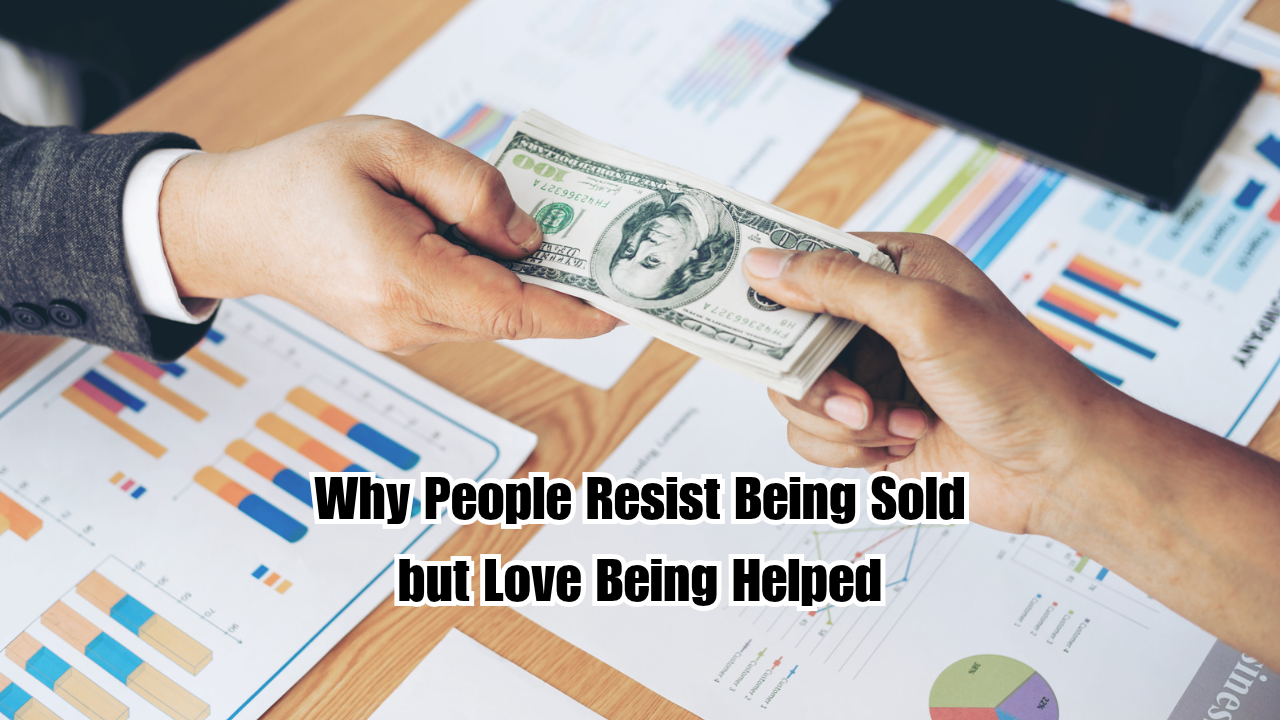
The mistake that many salespeople make is believing that a potential customer wants to buy their product or service. They don’t. They want the solution that the product or service provides in answer to a problem they have. It has nothing to do with what you are offering them and everything to do with how they can benefit from it. People resist being sold to, but they love being helped.
Salespeople are professional problem solvers. They offer an answer, a transformation, a better experience, etc. Their job is not to pitch to people, it is to help people. The sooner you realize this, the better your customer interactions will be.
There are three sales pitches that will turn people away because they feel disingenuous. The first is the connection tug. This is when someone relies on an old connection they had with you in order to guilt you into purchasing from them. For example, this might come as a text, phone call, or social media message that sounds like, “It’s been so long since we’ve talked. I hope you’re doing well! I started selling this amazing product, and I immediately thought of you.” The likely reality is that they are going down their contact list, copying and pasting a message, and hoping that an old friendship will be enough to get them the sale. It usually isn’t because you were top of their mind or that they believe their product would actually benefit you.
The second approach that will turn people away is called the pitch slap. This is a term that I heard recently, and it perfectly describes what I have experienced first hand. The pitch slap is when someone approaches you under false pretenses. It might be a LinkedIn message congratulating you on a promotion or work anniversary, it might be a friend request on Facebook or Instagram, or it might be someone approaching you in person to pay you a compliment.
The moment you start engaging with them is the moment they reveal their true intentions. They saw your promotion and want to take advantage of your new decision-making power. They complimented your shoes, and now they’re telling you all about what they do and the product they sell. This unsolicited sales pitch can be very frustrating for the potential customer, and even if they might have been interested in the product, this approach could turn them away from buying from you.
The third sales pitch that does more harm than good is the critique opener. This is when someone evaluates you or your business and starts the conversation with, “Here’s everything you’re doing wrong, and this is why you need my product/service.” If you tell me that I’m doing a bad job within my specialty, I’m likely going to ignore you or block you. Why would I want to give you my money after you just insulted me? However, if you tell me that you’re impressed with my work, and you have something that could potentially improve it further, I may hear you out. I always want to improve, but I don’t appreciate being talked down to. That’s the difference between being helpful and hurtful in your sales pitch.
The central theme in these three pitches is that they are more about the salesperson getting the transaction than they are about solving the problem for the customer. Nobody wants to be sold to because they don’t like how it feels. Everyone wants their life to be easier, though, and if your product or service can do that for them, then they will gladly accept the help. When the pain of their problem is greater than the cost of the solution, that’s when the decision is made. As a salesperson, it is your job to listen to the customer, understand their needs, and provide them with a path forward. Focus on helping them by providing value through the things you offer. The sale becomes the natural next step rather than a pressured decision. The customer only cares about the transformation, not the transaction.
-Meghan Slaughter
Stay connected with news and updates!
Join our mailing list to receive the latest news and updates from our team.
Don't worry, your information will not be shared.
We hate SPAM. We will never sell your information, for any reason.
